
HEALTHCARE / PATIENT JOURNEY / DIGITAL PLATFORM / CRM
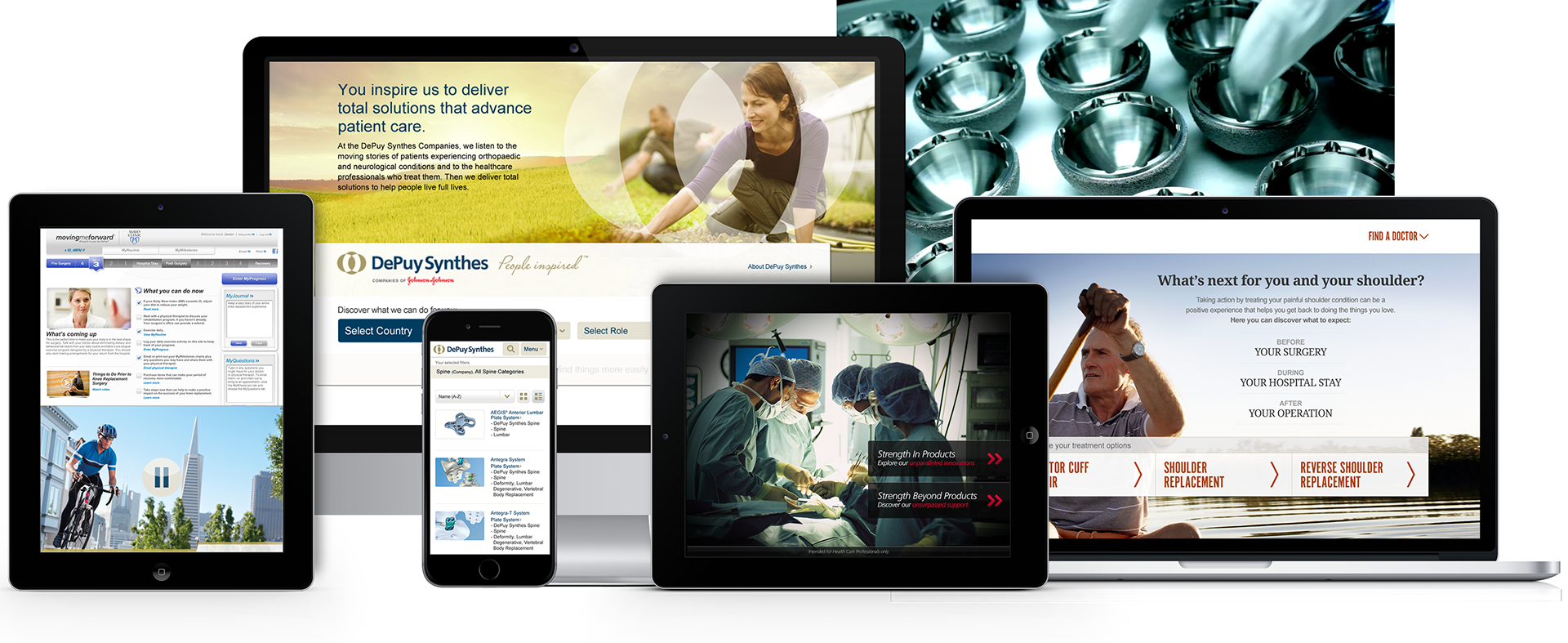
When Johnson & Johnson merged DePuy with Synthes, the new medical devices company inherited a digital presence scattered across hundreds of disconnected websites worldwide. The brief was not simply to rebuild it, but to use the rebuild to transform a century-old device manufacturer into a solutions company powered by digital. The result was a single global platform that unified that sprawl into 75 connected sites and apps spanning more than 3,000 products, serving two very different audiences: the surgeon and the patient.
The two audiences needed opposite things, so the platform was built as two distinct experiences rather than one generic site. Discovery with surgeons revealed three truths: they think in procedures, not individual products; they only want content in their own specialty; and they have no time to spare. So the professional experience was tailored by specialty, with search and filtering precise enough to find anything from a full surgical system to a single screw in seconds.
Patients revealed something more human. When they are still living with joint pain and searching for answers, they distrust branded websites, but that changes the moment they decide on surgery. So the patient experience worked in two modes. For people weighing their options, treatment centers organized around the body, opening with a simple question, where does it hurt, from knee to hip to shoulder. And because it can take seven to eleven years to decide on surgery, procedure pages built to ease the anxiety that keeps people waiting, turning pain sufferers into prospects ready to act.
Two audiences, two experiences.


For surgeons: tailored by specialty, with filtering fine enough to find a surgical system or a single screw in seconds.

For patients: organized by the body, not the product, and tuned to where someone is in deciding.
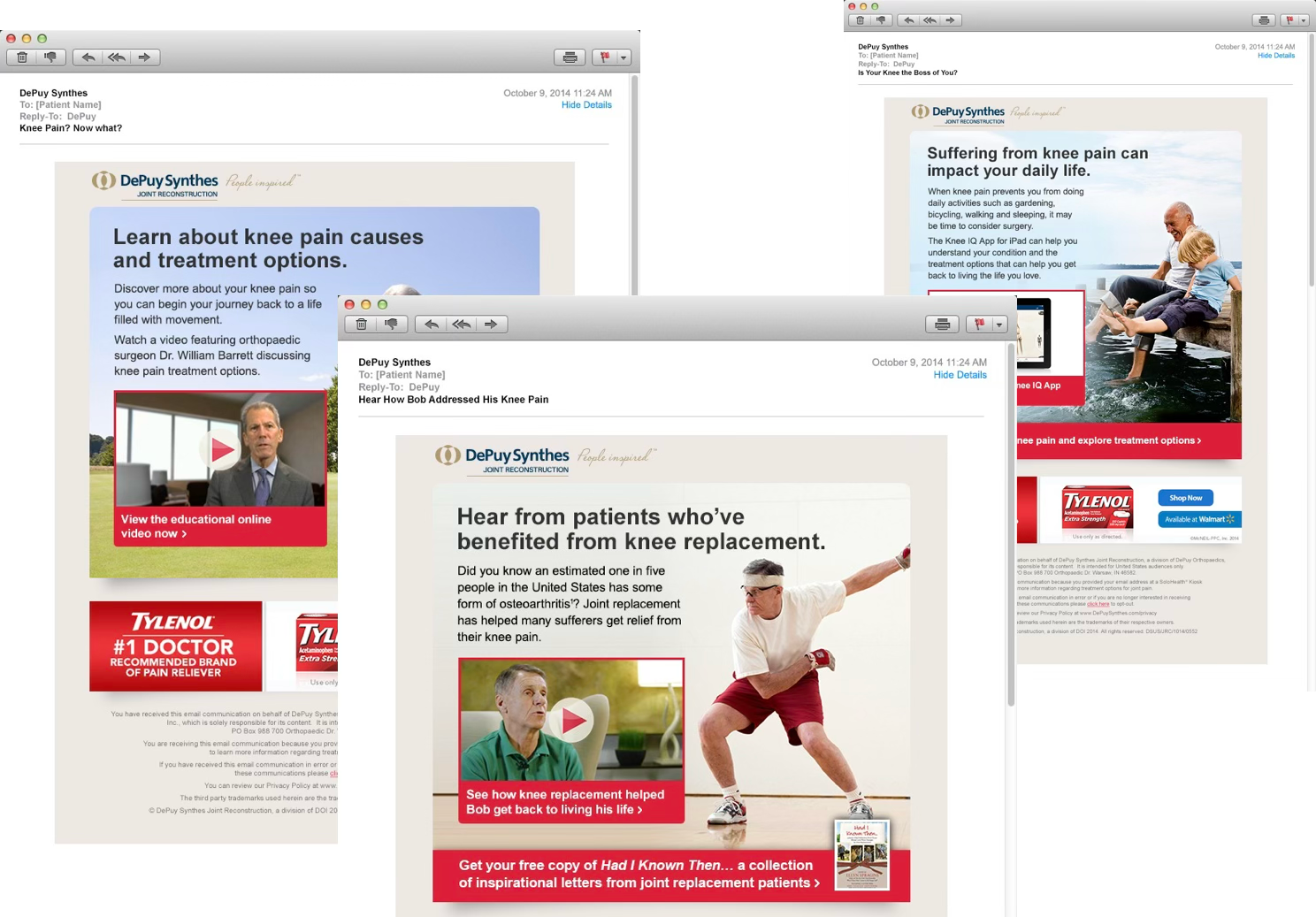

Weighing options.

A nurture program for those considering surgery, built on strategy from our insights team, designed to answer real hesitations and move someone toward a decision.
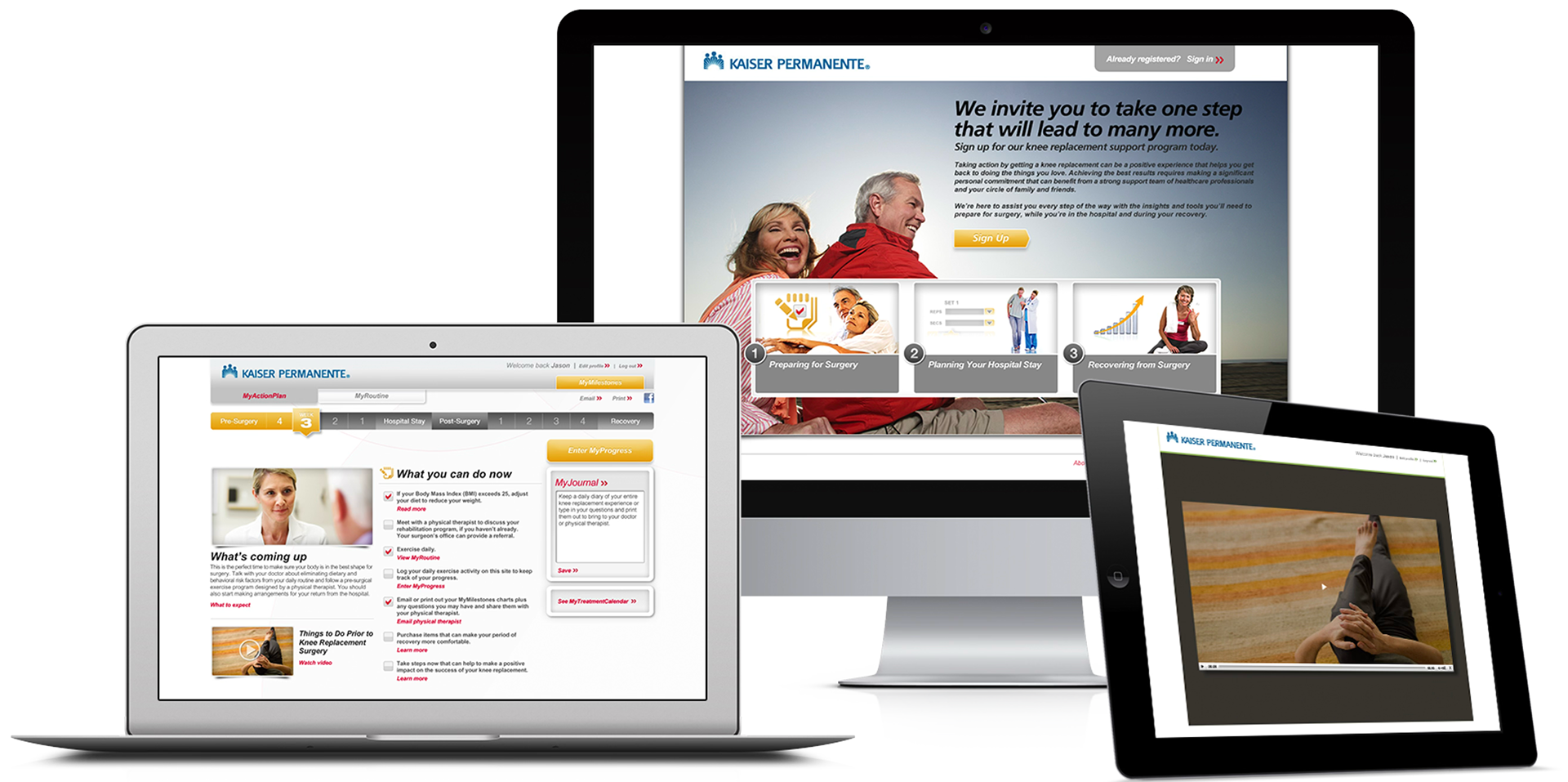
Preparing and recovering.

A provider-customizable patient support tool, serving stage-based guidance on a timeline centered around the surgery date.
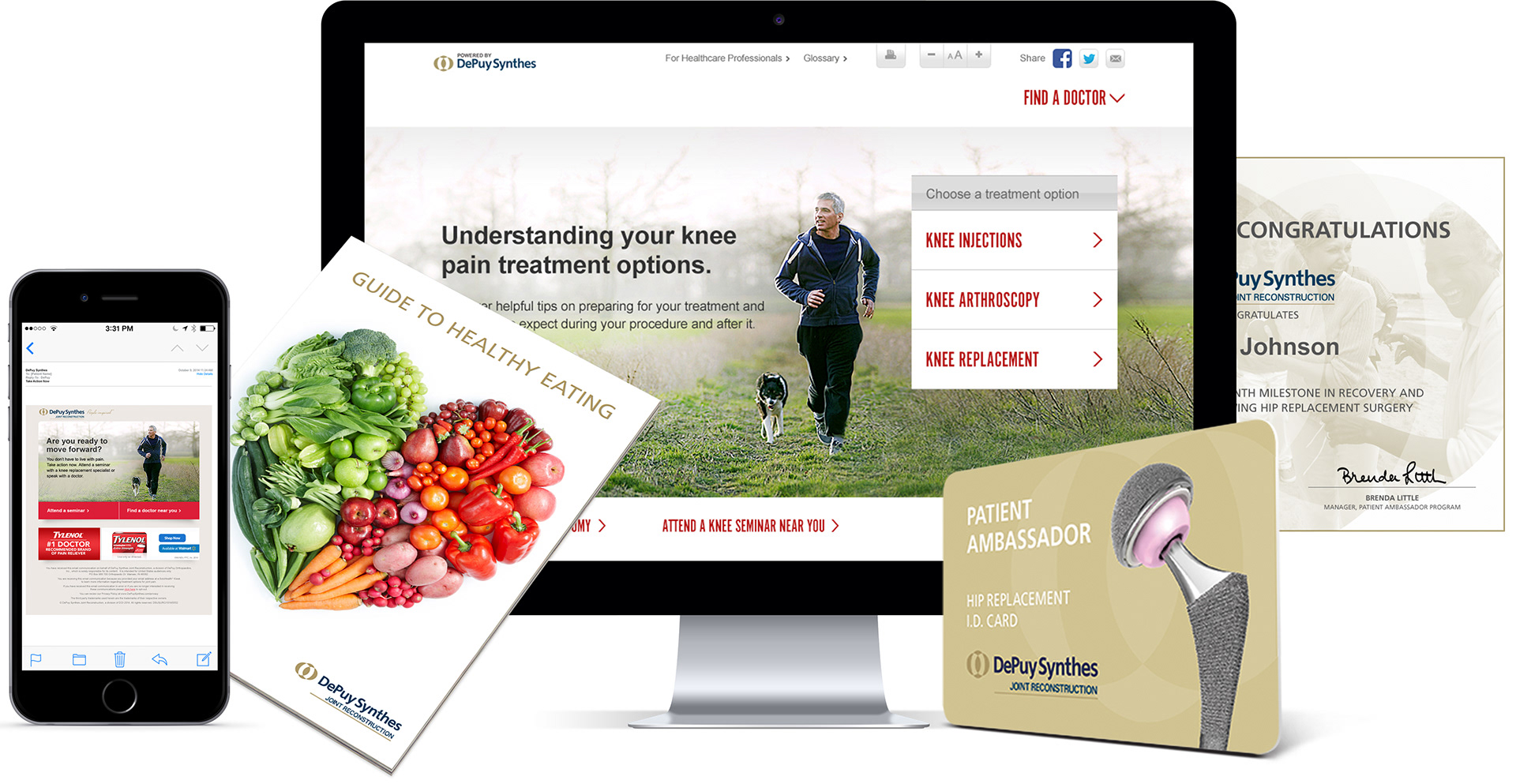
Advocacy.

A program that turned recovered patients into storytellers, helping the next person feel less alone and closing the loop back to awareness.

After launch, the platform delivered. Site interactions rose 42 percent, task completion climbed from 53 to 72 percent, and patient satisfaction moved from 5.11 to 6.79.

Beyond the numbers, it did the human work it set out to do: setting realistic expectations before surgery, easing the burden on surgical practices, and supporting better patient outcomes. It succeeded well enough that the client kept expanding it, into tools for surgeons and for entire hospital systems, all built on one idea, a brand that chose to be a guide rather than a billboard.


↑Back to Top